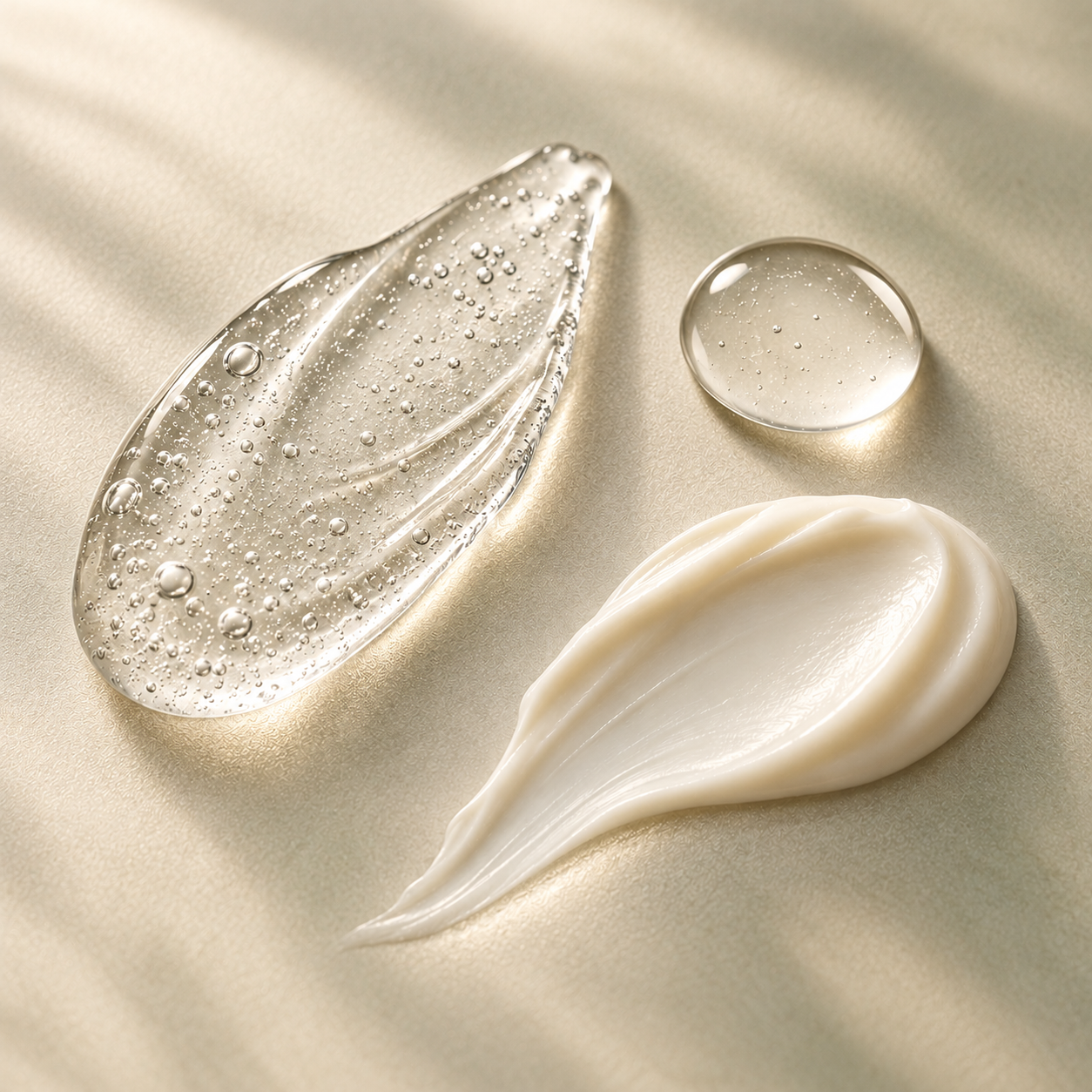
Welcoming clients, cleaning work surfaces, handling equipment and washing hands again: salon and clinic teams put their hands to work throughout the day. When skin becomes rough, applying extra hand cream at bedtime can overlook the missing moisturizing step during working hours.
Focus on daily exposure, not ageing comparisons
Hand-care conversations do not need unsupported claims about hands ageing faster than faces. A more useful starting point is whether washing, wet work and cleaning-product contact are followed by recurring dryness, tightness or discomfort. Frequent washing can dry the skin, and dermatologists recommend moisturizing afterwards.[1]
Moisturize after washing, not only before bed
After appropriate handwashing, gently pat dry with a clean towel and apply hand cream or ointment while the skin is slightly damp, including around fingertips and nails. After an alcohol-based sanitizer, let it dry before applying moisturizer. Do not skip necessary hand hygiene to avoid dryness.[1]
Choose a product people will actually use at work
Alongside richness, assess the after-feel, ease of dispensing and compatibility with the next task. Fragrance-free products are a useful starting point for dry or easily irritated hands; thicker creams and ointments are also options to compare.[1]
A small workplace trial can record whether staff are willing to use the product after washing, whether the packaging is convenient and whether discomfort occurs. A light texture does not automatically mean inadequate hydration, and a rich texture is not automatically suitable for everyone.
Three practical steps for teams
- Place it where people will use it. Keep suitable products near handwashing facilities or in personal staff storage. Manage packaging according to the business’s hygiene and infection-control requirements.
- Keep purposes clear. Hand cream moisturizes; it does not replace cleaning, disinfection or required protective gloves.
- Include skin condition in workplace checks. Report cracks or persistent discomfort early and follow workplace arrangements and professional advice, rather than relying on increasingly thick applications.
Extend the advice to clients
Salons can include hand care in home-care discussions. Ask about the client’s work and washing habits, then demonstrate the product quantity and areas of application. Give the exact product name and instructions so the routine can be repeated at home, rather than experienced only during a visit.
Persistent cracking, itching or stinging when products are applied may require dermatological assessment and should not automatically be treated as simple dehydration.[2]
Professional partners can contact Dermatriz for product specifications and supply information.
Sources and further reading
- Original Derm-Mart article (Chinese), adapted for Dermatriz professional readers.
- [1] American Academy of Dermatology: Dry skin relief from handwashing
- [2] American Academy of Dermatology: Relieving dry skin